Extra Life Triathlon Fitness

This blog has moved to www.extralifetrifit.com. Extra Life Triathlon Fitness is a coaching service to help people achieve exceptional fitness, joy, and fulfillment in the sport of triathlon. Join us today!
Showing posts with label Humility. Show all posts

Wednesday, October 1, 2014

Ironman Silverman 70.3 Pre Race

There's this incredible feeling you get when you approach the end of a fantastic season. It's a feeling that may be compared to the finishing of any major project in life and is almost unfitting for such a major event or achievement, I can describe it in one simple word.

Meh.

It bothers me that I feel this way, but I can't escape it. I'm like a student at the end of a school year just phoning it in until the last bell rings. Don't get me wrong, I'm doing all the training, and I think I'm prepared, but I'm not giving Ironman Silverman 70.3 the consideration it so rightly deserves. Due to the scale of this event, I should not be so careless. However, I am so ready for an off season, and have had such a tough recovery since Ironman Boulder that I can't help but be a little apathetic toward this race.

That said, I know that as we drive out toward Vegas, my attitude will change. It better, or I will be in for a heavy dose of ass handing by this potentially brutal course. One thing is for certain. No matter how much apathy I show toward this race going in, I'm going to be absolutely humbled by the time I cross the finish. I will need to have a lot more respect for this course. Here are the reasons.


  1. This is a harsh landscape. Every time I have been to Vegas, when I would poke my head out of the comfort of whatever smoke filled casino I happened to be occupying, I would immediately be punched in the face with whatever weather extreme happened to be happening that day, whether it be extreme cold, extreme hot, etc. Get away from the strip, and I am guessing that those extremes are amplified. The temperature is for this weekend is supposed to peak at 95, feeling like 99. I haven't been mentally preparing myself enough for that.
  2. This will likely be my first non-wetsuit swim. I'm okay with that, but I've never done it before, so I should be a little more considerate of that. Additionally, I don't do well in the cold. While the weather is going to be hot later in the day, We're looking at low 60's as we begin the race. I'm a wuss, so 76 degrees in the water is still not super warm for me. I'll be freezing my but off around the turn buoy, and trying to stay relaxed.
  3. The bike course will be hilly. While not as hilly as the original Silverman, it's going to be at least as bad as Cabo, which was a constant up and down. I'll need to be solid on my bike in order to be fresh for the run, and there is a lot of potential to over-bike. Not to mention potential wind gusts in the desert along the course.
  4. Did I mention that it will be hot? Well, it's going to be hot. Super hot. Especially on the run. My run has been suffering a bit lately, and this won't help.
Ok, just writing that out started to build up my anticipation a bit. Now I'm starting to have the respect for this thing! But alas, while I love racing, I can't wait for this one to be over so that I can begin to enjoy the off season. I am in desperate need of rest and recovery!

I hesitate to set any expectations for my race because there will be so many variables, including my first non-wetsuit swim, a hilly bike course, and questionable weather and wind. I will say that I hope to finish strong, healthy and uninjured. Unlike Boise, I hope to get off the bike with zero stomach issues. My nutrition plan seemed to work in Boulder, so I'm going to use that to get me to a place where I can get off the bike and run strong. Ideally, I want to finish this race ready to focus on recovery and off season fitness maintenance. I won't win any prizes at this one, except to say that I will have faced another fear (non-wetsuit open water swimming), and finished yet another 70.3. I'll be happy looking back on this race season, and looking forward to the next!

Thursday, July 3, 2014

Change is Never Easy - What We Can Learn from Exodus

I'm going off on a bit of a tangent, so bear with me. This has been on my mind lately due to some of my own personal circumstances. It's about "change". Nobody likes it. I mean nobody. If you think you do, you don't. Sure, it may be nice to have a change of scenery, or a change in diet, or take on a new hobby, but really only when it's our idea. When change is enforced on us, it's not so great.

In fact, just the very discussion of "change" may lose the attention of a few readers. And I'm about to lose a few more... Why? Because I'm going to start talking about the Bible.

Still there? Good! Thanks for sticking with me. This is not an attempt to get all "religious", I'm not going to try to indoctrinate anyone, and I'm not going to become "preachy" (ok, well maybe just a little). I'm simply going to use the Exodus story of the Bible to illustrate my points about how we handle change.

I'll briefly summarize the relevant points of the Exodus story (of which I'm including the story beyond the book of Exodus, as the Hebrews spent a mighty long time hanging out in the desert). In a nutshell, the self-exiled Moses is called by God to lead his people (the Israelites) from the bondage of slavery in Egypt and into the promised land, a land flowing with milk and honey.

Wow, sounds awesome! Thanks, God!

Well, despite the rosy picture that's painted above, our protagonist Moses was initially reluctant to perform God's Will, and continued to complain about his own lack of competence for the task. Further, the Pharaoh continued to disallow the freeing of the Israelites, despite the pain being inflicted on his own people. Eventually though, through God's demonstrations of His divine competence, Moses was able to lead his people out of Egypt and beyond the Red Sea toward Milkville and Honeyland.

Hooray! Happy ending! All is well, right? Not quite. It turns out that between Egypt and the promised land exists a vast desert through which Moses and the Israelites would have to pass... well, more like aimlessly wander. Almost immediately, the people began complaining to Moses about their current living conditions, pining to return to the comfort of slavery in Egypt, and praising other gods as a means of trying to find a "quick fix" to their current problems. Consequently, God punished them for their lack of faith by forcing them to remain in the desert for 40 years before they could enter the promised land.

Eventually they made it to their destination and for a time became a powerful nation. However, it wasn't without a great deal of (mostly self inflicted) misery.

Regardless of what personal opinions each of us may have about whether these events actually occurred, the "story" itself brilliantly demonstrates interesting lessons into how we process change.

1. Regardless of how necessary and attractive the change may be, any departure from a required level of comfort will create resistance.

As you can see by this story, once the Israelites' comfort was compromised, even the prospect of going back into slavery seemed more attractive than the present situation. Even Moses, the "project manager" so to speak, had his doubts from time to time. When it comes to getting out of our comfort zone, if we hope to see improvements in our own lives at times we have to take a leap of faith and absorb a little discomfort for a while to reap the benefits of the end result.

2. The long term benefit of any change can be overshadowed by the short term pain.

When we are in any type of discomfort, it is hard to reconcile that with the idea that things will get better. On the contrary, we see short term pain as endless suffering. We will do anything to get out of it immediately. If we can keep the end goal in sight and continue work through the challenges toward a positive result, the pain will be short lived.

3. Lack of buy in and resistance to change can be detrimental to the expected positive result, and can serve to prolong the pain.

Due to their lack of faith and resistance to God's will, the process of getting the Israelites from Egypt to the promised land took much longer than expected. If the attitude on the part of the Israelites was one of cooperation and helpfulness, it likely would have taken much less time. Instead the Israelites had to spend 40 extra years in the desert. I think that one of the purposes of this story is to demonstrate how resistance to positive change only serves to delay any positive outcome, and will increase the amount of time spent in the desert.

4. We may not always receive praise for the success of the change, or even see the benefits of the outcome.

One last part of the story that is a little depressing, but illustrates an important lesson is that Moses died before the Israelites could even enter the promised land. He didn't even get to experience the reward of all of  patience and hard work. Sometimes we have to invoke change that we may not necessarily be rewarded for or even see the benefits of. This is not to say that we will die before they provide any benefit, but there are scenarios such as career or job changes which leave us removed from any benefit. Further, it is not always likely that we will receive praise from others when a change is successful. In this regard we are called to do good for the benefit of humanity without expecting anything in return. Not always easy, but the rewards are inherent if not explicit.

Now, we don't all have the hand of the Almighty God to force productive and positive change on people. We can't turn rods into serpents, or bring forth springs of water from dry land. We mortals require a more gentle approach. Worst of all, we have to deal with the "will of other people" which doesn't always align with ours. But faith, commitment, persistence, and keeping your eye on the end goal while overcoming present obstacles make achieving the goal more manageable.

For any type of change, between "A" (the starting point) and "B" (the point when the change is completed), there will have to be some time spent in the desert. Here is a diagram to help demonstrate:


How long you spend in the desert is largely up to you. When you think about your role in any kind of change, consider this story. When change takes place in your life, are you Moses? Are you the Israelites? Are you Pharaoh? Or are you trying to play God?

Thursday, May 22, 2014

Ironman Los Cabos Epilogue: Lessons Learned


After having some time to really reflect on Ironman Los Cabos, and how the experience shaped out, I wanted to lay out some of the things I learned along the way which I found important, and can be applied to any passion project a person may seek to accomplish. In a nutshell, completing this race was absolutely glorious. The finish chute was a blur of afternoon sunlight and mental fog, but it was absolutely glorious. Will I do it again? Absolutely. What did I learn? Read below to find out.
  1. We human beings really are capable of more than we give ourselves credit for - Yes, I know it's cliche, and we can read this any number of times a day on inspirational Facebook posts, but it's also very true. We tend to give up too quickly or too easily. By our very nature, we are conditioned to conserve. Conserve our pride, conserve our welfare, conserve our energy. In other words we are conditioned to be "safe". After all, as we evolved we had to develop mechanisms to keep ourselves from harm - to run away from Sabertooth Tigers, or survive through cold winters or famine. I'm certainly not endorsing those, but there are ways that we can channel those additional stores of energy in non-stressful ways (I want to stress "non-stressful") to go the extra mile in any endeavor with which we are involved.
  2. Understanding and acknowledging our limitations is a beneficial exercise - Is number 2 contradicting number 1? Yes!... In a way. But you see how I mentioned channeling energy in non-stressful ways (I guess I want to re-stress my stressing of "non-stressful"). That is where understanding our limitations can benefit us. We all know how we feel when we hit a brick wall. Our energy immediately depletes, we lose sleep, we get sick, we get irritable, we crave sugar (ok, that one is tough to gauge). When I felt any of these symptoms during my Ironman training, I knew that it was my body telling me that I was pushing too hard. When that happened I had to take a step back and make rest my priority, refresh my mind and body, and recover the passion and energy I had for pursuing this goal. Often times the best offense is a good defense. Additionally, knowing our limitations gives us a good indication on where we can improve, and whether it makes sense to refocus our energy in more positive ways.
  3. "No pain, no gain" is some of the worst advice ever given - In fact, pain is most often an impediment to progress. Alternatively, some of the greatest gains happen with little or no physical pain, and very little discomfort at all! When I first began training using heart rate as a guide, I didn't even feel like I was working out at all. I barely broke a sweat, pulling 11-12 minute miles on runs. Gradually the pace improved and the effort felt much the same. It's only with the greater gains that more discomfort becomes required, the "last 10%" so to speak, and even that should be done sparingly. It all comes back to understanding limitations. Pain is different from discomfort. Our ability to suffer through discomfort is part of a growing experience. Pain, on the other hand, is biofeedback telling us that we are overdoing it and have to take a step back. This advice would be better read as "No pain, KNOW gain!"
  4. We can make the experience of achieving a goal much more fulfilling by finding a way to be in service to others - When I first considered training for an Ironman, I thought of all the hours I would have to put in, the money I would have to spend, and the emotional capital I would expend and it made it seem like a very selfish endeavor. To be fair, it was. I was looking to better myself. But how can we benefit others unless we focus first on improving ourselves (something about removing the plank from one's own eye comes to mind)? In my case, I chose to set an example for those that may have always thought of achieving a far reaching goal, but who may have talked themselves out of it numerous times (after all, I was like that). I wrote about it openly in the hopes of inspiring others through my experience. This requires conquering the fear of being vulnerable (spoiler alert: that's number 5 below). Additionally, I raised money for charity to hold myself accountable to the goal. After all, it is much more difficult to quit when times get tough if you have more eyes on your progress and a charity goal depending on your achieving the goal.
  5. The experience can become more meaningful if we can conquer the fear of being vulnerable - I used to be a bit of a cynic, often becoming critical and nay-saying in many situations. I now understand that that was a defense mechanism for me so that I would not be the subject of criticism. If I can be critical of other peoples' desires to fulfill a dream, I could justify my own lack of inspired confidence. Too often we put up this armor of cynicism, and neglect the great potential for self improvement that comes from being vulnerable. Brene Brown is an expert on vulnerability, and goes into great detail of it's importance in this TED talk and in her book, Daring Greatly. Making myself vulnerable by writing about my experience, especially at the beginning when I had no experience whatsoever, made me extremely uncomfortable. However, it made the experience of getting to my goal and achieving it that much more meaningful.
  6. You CAN find the time - Yes, you can. No seriously, you can. I know you have kids, I know you have a job, I know you have that thing on Thursday nights (I'm not stalking you, I swear). Regardless, the time is there. It's just about inventive time management. I know waking up earlier is hard, but that is a solution. You can also take your lunch breaks at work to focus on the goal. The point is that there is always a way to make the time. Within my training plan, I had to find 20+ hours a weak during the peak weeks to train. I would wake up earlier, use my lunch breaks, and use the actual commute to work to work in training hours. I still found time with the family and took care of all my obligations (in fact my family appreciated it more because I was setting a good example). 
  7. The right perspective changes everything - I know what it's like to fall into a downward spiral of despair and self loathing. The feeling that everyone is against you and the hard work is meaningless. These are the great demoralizers. The worst thing about these feelings is that they are overpowering, and they feel absolutely legitimate. However, I have found in my life that these are mostly problems with perspective. I've learned through this experience that, for me, one of the big differences between being happy and being miserable is my perspective. When I turned my negative attitude around and focused on the positive, things became much brighter. Ironman training was a great practice in perspective. Instead of saying things like "I have to run today", I would say "I get to run today". How lucky am I, that I am capable of getting myself up every day and working toward a dream? Truly we are fortunate if we allow ourselves to believe we are, and overcome the power of negative thinking.
  8. Humility is vital - There will be setbacks. There always are. Many times these setbacks may seem like a death nail into achievement of a goal. But when these setbacks occur, it is important to practice humility. Allowing our egos to get in the way of clear thinking will only make the situation worse. For example, as I was training during the summer months last year, I hit a plateau which wouldn't allow me to get any faster at my assigned aerobic heart rate range. This gave me two options. Run faster and train over my heart rate range (which would have potentially destroyed my training progress to that point), or humble myself and keep it slow. Sure, I wouldn't be able to run as fast as I wanted at that point, but checking my ego would allow me to be faster at that heart rate over the long term. A setback, yes. But the long term goal was still on track. Eventually I broke through the plateau and got faster. Humility ties a lot of these things I learned together in a nice little bow. Accepting limitations, practicing vulnerability, finding the right perspective, it's all about humility.
  9. It's worth it - Whatever "it" is, as long as the effect is positive, it's worth it. Because "it" is important to you, "it" will build your character, "it" will give you fulfillment beyond your expectations, and in turn the act of achieving "it" will inspire others. And when we inspire others, we can inspire ourselves, constantly improving, always reaching toward higher and more lofty goals. An upward spiral. Take it from me, you can.

Friday, February 28, 2014

Running Scared

A year ago, when I waved the forefinger of my one good arm in the air and proclaimed confidently to the heavens that "I would complete an Ironman", a year was a long way off. So far off in fact, that I needn't let March 30, 2014 worry me at all. It was a lifetime away, and certainly enough time to be adequately prepared to survive a 2.4 mile swim, 112 mile bike, and 26 mile run. My daughter would be in Kindergarten by then, my son with a healthy vocabulary. Here we are a month away, with my daughter in Kindergarten, my son already talking back to Mom & Dad. About a month away from the race, and I'll admit that I'm terrified. It turns out that regardless of how well prepared I may be, I'm are still venturing into unknown territory. And most fear is rooted in the unknown.

Within the last year, I have fully healed from an injured shoulder, cleaned up unhealthy habits and unhealthy thinking. I have surpassed my goals with training and racing, and believe I am well capable of completing the Ironman in 17 hours. In fact, I have been close to the front of the pack in most of the races I have run. While I'm not the tip of the spear, so to speak, I am closer to being the string that ties the pointy end of the spear to the stick that carries it. I could not be more prepared than I am right now. But the feeling of fear still grinds at the pit of my stomach.

So what exactly am I afraid of? Well, to make it easy, here's a fun little top ten list of things which may make a triathlete fearful before their first Ironman, some far fetched, others... fetched?

  • As odd as it sounds, there's the fear of being afraid. There is a lot of standing around and waiting before the gun goes off. That leaves a lot of time to be in my own head, which never ends well. For example, getting to the start line and succumbing to my fear in the form of a storm of gravity pulling all my blood from my head, at which point I collapse in an embarrassing heap, ending my race before it begins. Here comes the stretcher, making its way through the throngs of swimmers, now delayed in their start because some poor schmuck couldn't harden up. All eyes on me, as I'm carried off the beach in the opposite direction of where the race is to begin. 
  • The fear of getting sick right before the race. Thus far this year I've been lucky, but I don't want to tempt fate as chances are if I do get sick, it will happen just as I'm getting ready to race.
  • The fear of being halfway through the swim and then having to go to the bathroom. I mean, "grab a newspaper and some matches" go to the bathroom. Although, this may help me swim faster, or clear away any congestion from other swimmers.
  • The fear of other people around me having similar "bathroom issues".
  • The fear of panicking mid-swim. It's a long way out, and it will take a lot of effort just getting through the beach start, or as I call it the "Braveheart Start".


  • The fear of being skewered Crocodile Hunter style by a giant stingray. Heck, defiled by any sea creature, big or small, would be unpleasant 
  • The fear of getting one mile into the bike and realizing "crap, this is really hard." Well, duh.
  • The fear of blowing out multiple tires, dropping a chain, breaking a pedal, hitting an armadillo and exploding... any number of mechanical problems which would not be able to be fixed. 
  • The fear of having a diva-esque meltdown at around mile 20 of the run. At this point it is possible that some racers are so worn out that they may lie down prostrate in the middle of the road sobbing uncontrollably, chastising poor volunteers for running out of Snickers bars. 
  • Of course, the dreaded "DNF". Could be for any number of reasons, catastrophic to simple. But the result is the same: Failure to accomplish a much sought after goal.
I will say that I do have some of these fears to varying extents, and even some others not listed, rational and irrational. But look at all of these fears. What do they have in common? They are all things that are out of my control. Funny how fear grips at us when we don't have the ability to pull the strings. It is an interesting sport, triathlon, which people subject themselves to, where there are so many variables which can affect a result which is out of the athlete's control. It requires a lot of humility, of which I have done my best to try to learn and practice over the past couple years.

When I look at it that way, and when I diminish my fears by writing them down, seeing how silly they actually are, and recognizing that they are out of my control, it makes it easier to face them head on. That's not to say that I won't still be completely terrified a month from now, standing with 1499 other people covered in neoprene, waiting for a horn to sound which will begin an intense day of suffering, head games, loss of bodily functions, and diva-esque behavior. But it does mean that I can do my best to be prepared, stop worrying about what I can't control, and take the race as I now try to take my life; moment by moment, challenge by challenge... and hope to God that I just finish on my feet, with a smile on my face.

Monday, October 7, 2013

Balance

My training is starting to get longer, I'm in the middle of my first racing season which is going much better than expected, and I'm beginning to "feel" like I can actually compete in, not just finish, this Ironman event. However, despite the obvious upswing in the positives, it's far to easy to get caught up in all of it and let my ego and pride take hold. There is an event horizon at which point I cross my competitive spirit becomes greater than the purpose for which I am doing all of this.

My goal is to become healthy, fit, joyous, and free. To hopefully benefit others, and show that hope can overcome hopelessness through moving beyond fear and significant obstacles. I can not achieve this if my primary goal becomes to win simply for the sake of winning. "Winning" can be defined in many ways, and I want to continue to define it not by crossing the finish line first (although that is always a nice outcome), but by getting and giving the most out of the whole experience. Bragging rights are one thing, but inspiring others to give the best of themselves to experience true joy is another level of winning altogether.

Earlier this week I received an interesting email, which at first I believed to be a hoax. The email said "Congratulations Adam Hill. You have qualified for the Olympic-Distance race at the 2014 USA Triathlon Age Group National Championship." Turns out it is not a hoax. Since the Long Beach Triathlon was a sanctioned USAT event, and I finished in the top 10% of my age group, I qualified for the Nationals, to be held in August 2014 in Milwaukee, WI. My immediate reaction was to think of how cool this was, and how far I had come in such a short time. Last February I was scarfing down donuts and playing Call of Duty, and less than a year later I have been invited to compete with Olympic-level triathletes. That's pretty cool!


My second thought began to focus on the "what ifs". This was a trajectory that was not even on my radar until I had opened the email. But now I was considering that I had a shot at making Team USA and competing in the world championships. Perhaps even becoming an Olympian myself! A goal far removed from Ironman training.

See how quickly my mind veers off course from where my heart and spirit are guiding me? My ego takes hold and I am already winning races I never even knew existed until moments earlier. I want to do well in these races, but I want it to be a reflection of my training as well as success in practicing humility, acceptance, and patience. A balance, but one which is becoming more and more apparent in many aspects of life. It is good practice within the arena of triathlon.

This race is still something I am deeply considering, but not because I desire to win (to be in contention for a team slot, I would not only have to swim like a dolphin, but bike consistently at a 25 mph pace and run at nearly 6 minutes per mile for the course of the race), but simply because I would love the experience. How often can one say they had the opportunity to race in such an event? I'll keep you posted, but if you want to weigh in on what you think I should do, I would much appreciate it (just bear in mind that I will be racing in an Ironman two weeks prior to this event).

Speaking of championship events, be sure to check out the Ironman website this week, as they are ramping up to the Ironman World Championships in Kona, Hawaii this Saturday. If you have some time, check out the live coverage. Some of the most inspirational moments will be seen at the finish line. Ali'i Drive has been crossed by many people overcoming their own hardships, demons, or limitations. It is truly the greatest finish line in all of sports. If you miss it on Saturday, make sure to check it out when NBC airs their coverage. You can also see last year's powerful coverage here

As far as my training is concerned, I passed a couple other milestones recently. I actually biked to work, which was quite a jaunt of about 45 miles (San Clemente to Anaheim). This was my first ride through Santiago Canyon, and it's amazing what you miss despite living somewhere most of your life. I had never been back there, and it is absolutely beautiful. So beautiful in fact that I decided to ride through there again to get to visit my sister (San Clemente to Norco). This trip was tough. The Santa Ana winds were blowing, which were in my face the whole way, and there is a very steady uphill over the last half of the ride which I underestimated. Total climbing was over 4,000 ft, and it took me an hour longer than I expected. You can see my workout summary here with the elevation profile. I did snap some photos along the way, and once I arrived. I met my wife and kids there so we could ride some horses... Well, my wife and kids anyway. I had enough saddle time.


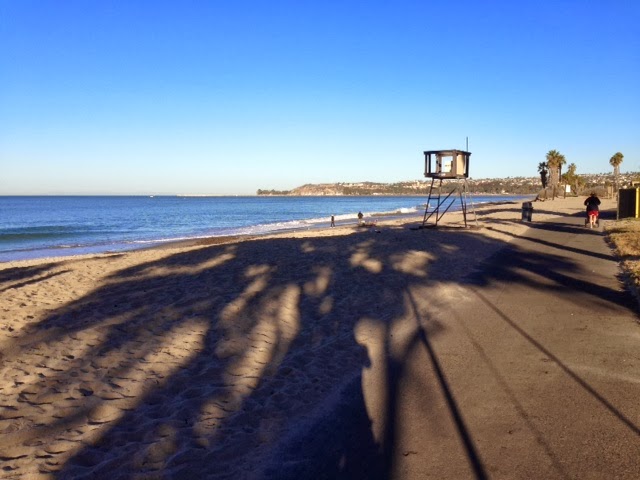
Capistrano Beach

Santa Ana River Trail - Acts as a wind tunnel during Santa Ana winds

Horses near Corona

Santiago Canyon

San Juan River trail with perfect view of Saddleback

Santiago Canyon reminds me of the central California coast
Horseback in Norco